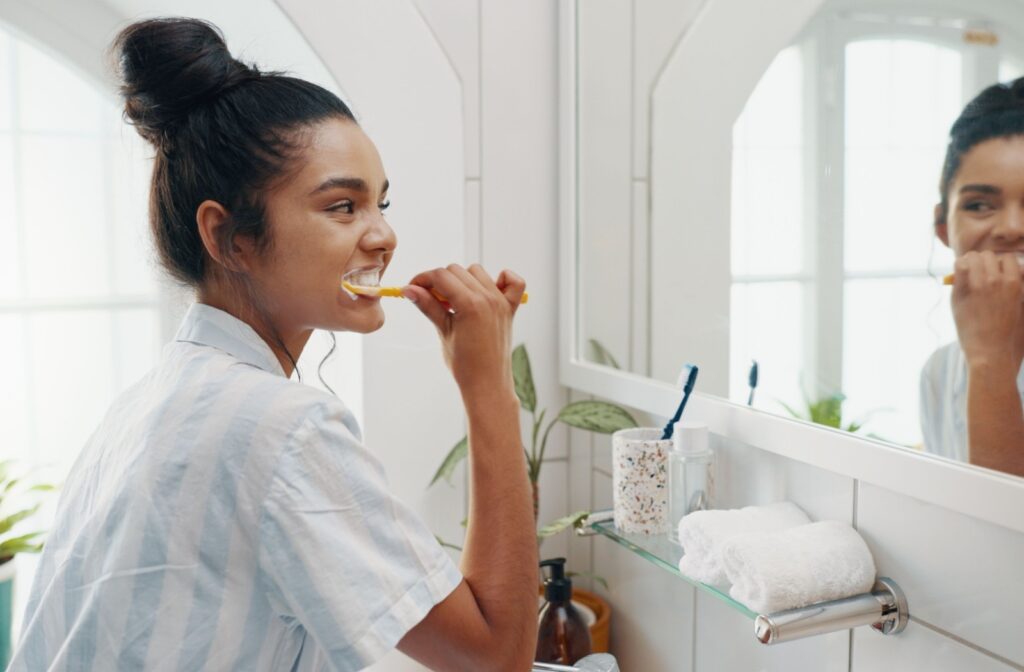
You probably have a tooth brushing routine you’ve followed for years—brush, spit, then rinse with water. It feels natural to wash away all that foam and have a clean mouth. But what if that final step is washing away the benefits of your toothpaste?
At Southgate Dental Centre, we suggest that you spit out any extra toothpaste but avoid rinsing with water right away. This simple adjustment, along with other proper teeth brushing techniques, helps protect your teeth long after you’ve finished brushing.
The Big Reason to Spit & Not Rinse
The main reason to skip rinsing is to give the fluoride in your toothpaste more time to work. When you leave a thin layer of fluoride on your teeth, it helps strengthen your enamel long after you’ve put your toothbrush away.
How Fluoride Protects Your Teeth
Fluoride is a mineral that strengthens tooth enamel—the hard, outer layer of your teeth. The stronger your enamel, the more resistant your teeth are to the acids from plaque and food that can cause cavities. However, fluoride needs direct contact in order to be absorbed into your enamel. If you wash it off right away, you don’t get its full protective effect.
What Happens When You Rinse?
When you rinse your mouth with water after brushing, you wash away most of the fluoride that your toothpaste just delivered. Think of it like applying sunscreen and then immediately jumping into the pool—the protection gets rinsed off before it has a chance to soak in.
Leaving a small amount of toothpaste on your teeth gives the fluoride in your toothpaste the time it needs to work.
How Long to Wait Before You Eat or Drink
After you spit out the extra toothpaste, try to avoid eating or drinking for at least 30 minutes. This gives the fluoride a better chance to be absorbed into your enamel without interruption.
What About Mouthwash & Floss?
When to Use Mouthwash
Using mouthwash right after you brush can wash away the fluoride from your toothpaste. For better results, you can use mouthwash separately from brushing, like after lunch, to freshen your breath without diluting your toothpaste’s benefits.
It’s also helpful to understand what kind of mouthwash you’re using. Some mouthwashes are cosmetic, mainly for fresh breath, while others have different therapeutic ingredients.. No matter which type you choose, however, you should use it separately from when you’re brushing.
The Right Time to Floss
Flossing before you brush helps loosen plaque and food particles from between your teeth. When you brush afterwards, you clear away that debris and allow the fluoride to reach more of the surface of your teeth.
Key Steps for a Healthy Smile
Good habits are the foundation of a healthy smile. A simple and effective oral care routine includes a few key steps.
- Brush your teeth twice a day for two minutes with a soft-bristled toothbrush.
- Use a fluoride toothpaste.
- Floss once a day, preferably before you brush at night.
- Spit out your toothpaste, but don’t rinse with water immediately after.
Brushing Tips for Your Children
It’s important for children to have a healthy oral care routine, but their needs are a bit different from adults. Supervision is an important part of making sure they brush safely and effectively.
- For children under 3: Use a tiny smear of fluoride toothpaste, about the size of a grain of rice.
- For children 3 to 6: Use a pea-sized amount of fluoride toothpaste.
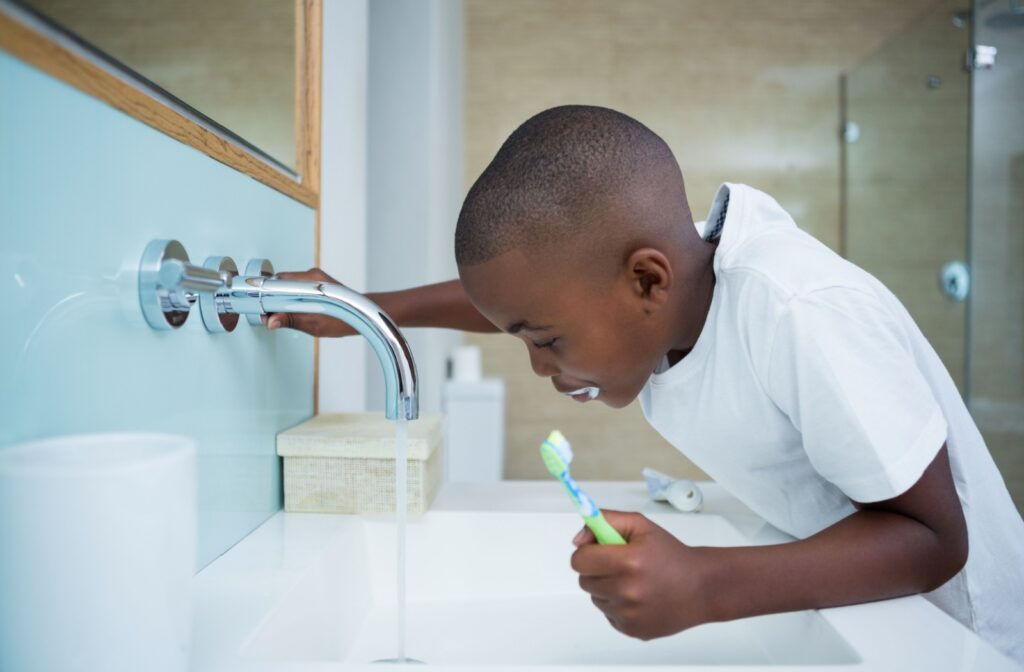
Always encourage your child to spit out the toothpaste after brushing. This helps minimize how much they might swallow.
Brushing your teeth together as a family can turn brushing into a fun, shared routine. This simple act of leading by example helps establish good habits that support your child’s health for years to come.
Your Dentist & Your At-Home Routine
Regular check-ups are a core part of any oral health plan. While your daily routine is focused on clearing away plaque, a professional dental cleaning can address the buildup of tartar—a hardened form of plaque that your toothbrush can’t remove. By clearing away tartar, your dental team helps your daily brushing and flossing be more effective.
As your dentist in South Edmonton, our team at Southgate Dental can provide personalized advice to support your at-home care. Contact our office today to schedule your next appointment.